Current Location: Blog >
Singapore server
1. overview: why deploy gm servers in singapore
• as an asia-pacific network hub, singapore has rich bandwidth and low latency, making it suitable as a gm (game master/management) or control plane node.• when facing players in southeast asia and greater china, the common delay from singapore to hong kong/taiwan is 7-20ms, and to southeast asian nodes is 10-30ms.
• enterprises need to consider compliance and computer room selection (such as equinix sg1/sg2, aws ap-southeast-1, google asia-southeast1, etc.).
• the gm server is usually responsible for command distribution, global configuration, log collection and cross-zone management, requiring high availability and low latency.
• this article will provide specific configuration samples, link delay data, linkage architecture and real cases for operation and maintenance reference.
2. physical location and network selection of singapore server
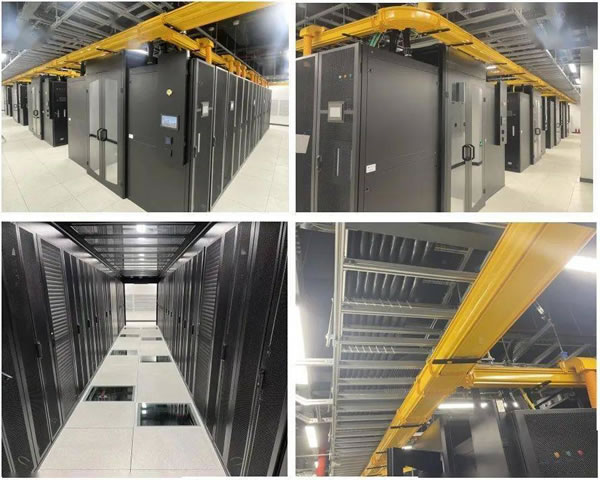
• common computer rooms: equinix sg1/sg2, singtel interconnection, major cloud vendor areas (aws/google/azure, vultr, digitalocean).• selection recommendation: for the control plane, multi-region private network connection (vpc peering / direct connect) is preferred.
• public network link: it is recommended to have at least 1gbps port, and reserve 3-5gbps or more for peak scenarios, and expand the capacity according to sla.
• latency reference (icmp/udp test): singapore → hong kong 8-12ms, singapore → tokyo 28-40ms, singapore → sydney 60-75ms, singapore → los angeles 150-180ms.
• ip and bgp: it is recommended that important control nodes use anycast/bgp to publish key ips to facilitate global routing optimization.
3. key points of architecture design for global linkage
• architecture layering: global control layer (singapore gm), regional game layer (regional game servers), edge layer (cdn and edge rpc).• data synchronization: use asynchronous replication + regular full verification, and the control plane uses message queue (kafka/rabbitmq) to distribute instructions.
• dns strategy: use global anycast dns for the main domain name, and use geodns for important subdomains to achieve recent scheduling.
• load balancing: layer4/l7 mixed strategy, regional entrance uses nginx/haproxy for reverse proxy and health check.
• disaster recovery and consistency: after key configurations are written to the singapore master node, synchronization with rpo <= 5s is completed in each region through the multi-active/active-standby strategy (example target).
4. server configuration and specific examples (including tables)
• the following table gives an example configuration of a singapore gm node and three regional servers, including cpu, memory, storage, bandwidth and usage.• the table shows real example configurations for easy reference in selection and capacity planning.
| node | vcpu | memory | storage | public network bandwidth | use |
|---|---|---|---|---|---|
| singapore gm master node | 8 vcpus | 32gb | 500gb nvme | 1 gbps (burstable to 5 gbps) | control plane, log aggregation, management api |
| tokyo area service | 16 vcpus | 64gb | 1tb nvme | 2 gbps | game logic, player connection |
| western us regional service | 32 vcpus | 128gb | 2tb nvme | 5 gbps | high concurrent session processing, main database |
| europe regional server | 16 vcpus | 64gb | 1tb nvme | 2 gbps | zone load, caching layer |
• it is recommended that the production environment performs active-active or active-standby switching (keepalived, consul, etcd) on the gm master node.
5. cdn, domain name resolution and ddos defense strategy
• cdn: it is recommended to use cdn to accelerate static resources. the edge nodes cover asia/the united states and europe, and the cache hit rate target is above 90%.• domain name: the main domain name uses anycast dns (such as cloudflare, ns1), and geodns to divert players.
• ddos protection: enable waf + traffic cleaning on the control plane and ingress. it is recommended that cloudflare spectrum or the cloud vendor's shield/anti-ddos.
• bandwidth elasticity: to cope with ddos, reserve cleaning bandwidth or use cleaning center access to ensure the stability of real business bandwidth.
• security policy: speed limit, connection threshold, black and white list, rate limit, combined with real-time monitoring (prometheus + grafana + alertmanager).
6. real case: deployment and operation and maintenance data of a game company as a control node in singapore
• background: the company will deploy the gm control plane in singapore aws (ap-southeast-1) in 2024, and regional game servers are distributed in tokyo, west america, and frankfurt.• traffic and latency: the peak number of simultaneous online players is 500,000, and the peak qps of control instructions is about 12k; the average rtt from singapore to tokyo is 34ms, and the rtt from singapore to the west is 160ms.
• configuration: gm master node uses 8vcpu+32gb, redis cluster (3 nodes, r5.large), three copies of kafka, and logs are stored in elk/opensearch.
• disaster recovery: the regional server uses master-slave database replication, with an rto target of 30 minutes and an rpo target of 5 seconds; cross-region drills and switching tests are conducted regularly.
• effects and lessons learned: singapore gm has reduced authentication and configuration delays for southeast asian users by 10-30%. however, attention should be paid to the impact of trans-pacific link jitter on command distribution in the us region, so a local cache + batch delivery strategy is adopted for the us region to reduce dependence.
- Latest articles
- Security Compliance And Tariff Analysis Of Japanese Cn2 Recommendation In Enterprise Overseas Deployment
- Summary Of Common Problems And Solution Steps For Simulator Japanese Native Ip Settings
- Price Comparison Guide: Billing Model And Hidden Cost Analysis For Us High-defense Server Rental
- Enterprise Deployment Reference: Is Alibaba Cloud Hong Kong A Native Ip? Analysis Of Pros And Cons For Cross-border Business
- From Purchase To Deployment, Explain In Detail The Key Points Of The Process Of Local Implementation Of Korean Kt Native Station Clusters
- New York Computer Room Vps Fault Recovery And Backup Strategies To Ensure Business Continuity
- Contract Terms And Guarantee Details That Must Be Considered When Choosing Hong Kong High-defense Server One-year Service
- On-demand Expansion Teaches You How To Rent A Cloud Server In Vietnam And Set Up Automatic Scaling And Backup Strategies
- Architectural Evolution: A Case Study Of How The Japanese Made Servers From A Single Machine To A Multi-region Deployment
- Which Malaysian Vps Is Recommended For Small And Medium-sized Sites And Which Is The Most Cost-effective?
- Popular tags
Asian Server
Guide To Purchasing A Server
Online Business
Stability Evaluation
Efficient Access
Games
Effect Evaluation
50m Server
Unlimited Content
Reasons For Disconnection
Importance
Real Sharing
Shared Host
Legal Risks
Korean Native Family
Zhihu
Vps Recommendations
Review
Taiwan Server
Cross-border Business Acceleration
Edge Cache
Website Stability
Usage
South Korea Server Fraud
Search Engine Optimization
Ssh
Features Of VPS
VPS Market
Unlimited
Precision Marketing
Related Articles
-

Analysis Of The Network Latency Advantages Of Choosing A Singapore Server For Apex Legends
analyze the network latency advantages of choosing a singapore server in "apex legends" and provide recommendations and purchase information. -

Singapore’s Cheapest Server Recommendation And Selection Guide
this article provides you with the cheapest server recommendations and selection guide in singapore to help you find the best web hosting solution for you. -

How Domestic Users Use Singapore Servers Efficiently
this article discusses how domestic users can use singapore servers efficiently, including server selection, configuration, optimization and other suggestions.